

Sandra Bullock and Nicole Kidman have taken the Owens sisters back to the top of the box office nearly 28 years after the original Practical Magic opened in theaters.
Practical Magic 2 debuted at No. 1 in North America with an estimated $30 million from 4,146 theaters over the September 11–13 weekend. The Warner Bros. sequel collected another $16 million across 77 international markets, giving it an estimated worldwide opening of $46 million.
The result ended the six-week No. 1 run of Spider-Man: Brand New Day and demonstrated the lasting appeal of a film that was a modest theatrical performer in 1998 before becoming a cult favorite through home video, television, streaming and social media.


It is an important opening-weekend victory for Bullock and Kidman, who returned as both stars and producers. However, the film will need substantial staying power before its box-office story can be declared an unqualified success.
Practical Magic 2 Claims the No. 1 Spot
The sequel’s $30 million domestic opening landed at the lower end of Warner Bros.’ projected range of $30 million to $35 million, according to the Associated Press.
That was still comfortably enough to lead the weekend. Spider-Man: Brand New Day fell to second place with approximately $8.4 million, while Christopher Nolan’s The Odyssey finished third.
The difference between first and second place makes the No. 1 claim straightforward. The qualification is that the $30 million figure represents estimated Friday-through-Sunday ticket sales in the United States and Canada, rather than profit or the movie’s eventual total.
The film remained No. 1 on Monday, September 14, earning an estimated $1.73 million and bringing its four-day domestic total to approximately $31.7 million, according to The Numbers.
The Original Film Needed Years to Find Its Audience

Directed by Griffin Dunne, the first Practical Magic opened on October 16, 1998. It introduced Bullock and Kidman as Sally and Gillian Owens, sisters from a family of witches living under an ancestral curse that threatens the men they love.
The movie opened with approximately $13.1 million and completed its original domestic run with about $46.8 million. Its unusual combination of fantasy, romance, comedy, domestic drama and supernatural horror divided critics and prevented it from becoming a major theatrical hit.
Its reputation changed over time. Viewers embraced the Owens family, the story’s emphasis on sisterhood and memorable sequences such as the midnight-margaritas scene. Annual autumn rewatches, streaming availability and online fandom ultimately gave the film a cultural life far beyond its initial box-office performance.
The sequel’s $30 million debut is more than twice the original’s opening in unadjusted dollars. After accounting for ticket-price inflation, however, Variety noted that the two openings are much closer than their raw totals suggest.
Bullock and Kidman Were Essential to the Return
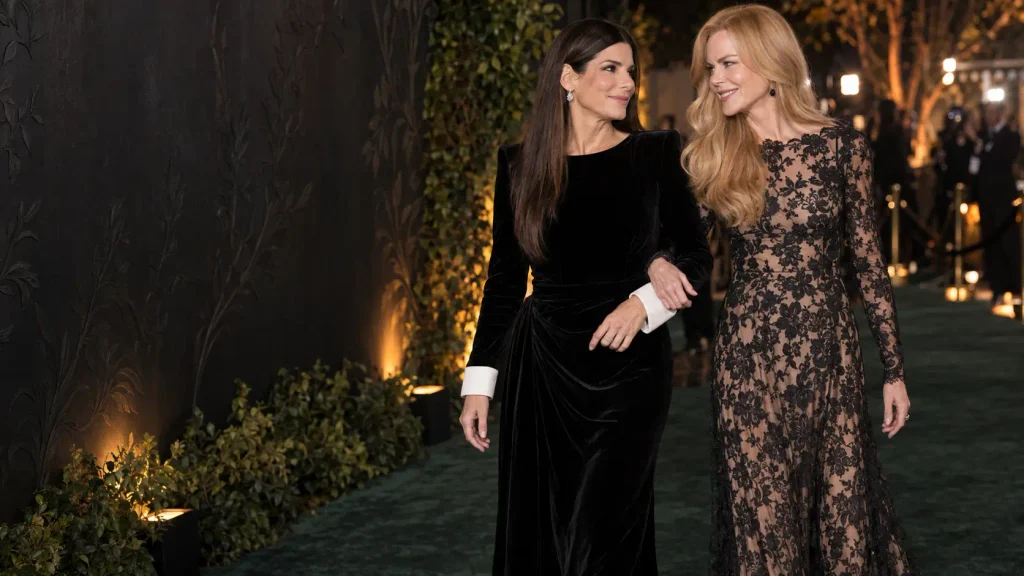
Practical Magic 2 reunites Bullock’s cautious Sally with Kidman’s freer-spirited Gillian as the Owens family again confronts the curse surrounding its romantic relationships.
The sisters are joined by a younger generation played by Joey King and Maisie Williams. Dianne Wiest and Stockard Channing also return as the Owens aunts, while Lee Pace, Xolo Maridueña and Solly McLeod are among the principal newcomers.
Susanne Bier directed the sequel from a screenplay credited to Akiva Goldsman, Georgia Pritchett and Kelly Marcel. The story draws from Alice Hoffman’s The Book of Magic, the concluding novel in her Owens-family series.
Bullock and Kidman also produced the film alongside Denise Di Novi. Their involvement made the project more than a studio attempt to reuse a familiar title: the two performers whose chemistry helped the original endure were directly involved in bringing its successor to the screen.
The film’s official production information emphasizes the returning Owens family while expanding the story into a multigenerational confrontation with the curse.
Audiences and Critics Did Not See the Same Spell
The sequel’s commercial appeal has so far been stronger than its critical reception.
Reviews frequently praised Bullock and Kidman’s chemistry while criticizing the 130-minute running time, complicated plotting and reliance on nostalgic callbacks. The Associated Press awarded the film two stars out of four, while The Guardian found familiar warmth in its celebration of sisterhood despite its narrative problems.
Audience response has been more encouraging. The film received a B+ CinemaScore, indicating that opening-night moviegoers responded more positively than many reviewers.
That gap matters because Practical Magic 2 is aimed heavily at viewers who already have an emotional connection to the original. Familiar characters, seasonal atmosphere and group outings among friends may prove more important to its theatrical performance than critical scores.
A No. 1 Opening Does Not Yet Mean a Profit
The sequel reportedly cost approximately $75 million to produce, before marketing expenses. Its $46 million worldwide opening therefore does not mean it has already recovered its costs; studios receive only a portion of theater ticket revenue.
The crucial measurement will be how well the film holds during its second and third weekends. A steep decline would make the first-place debut look more front-loaded, while a strong hold could allow the movie to benefit from limited direct competition and continue attracting audiences as the Halloween season approaches.
For now, the achievement is clear but specific. Bullock and Kidman have transformed a once-underperforming 1998 film into a sequel capable of topping the 2026 weekend box office.
Whether Practical Magic 2 becomes a profitable theatrical hit—or follows the original by finding its greatest strength over the long term—will depend on what happens after its opening spell.