
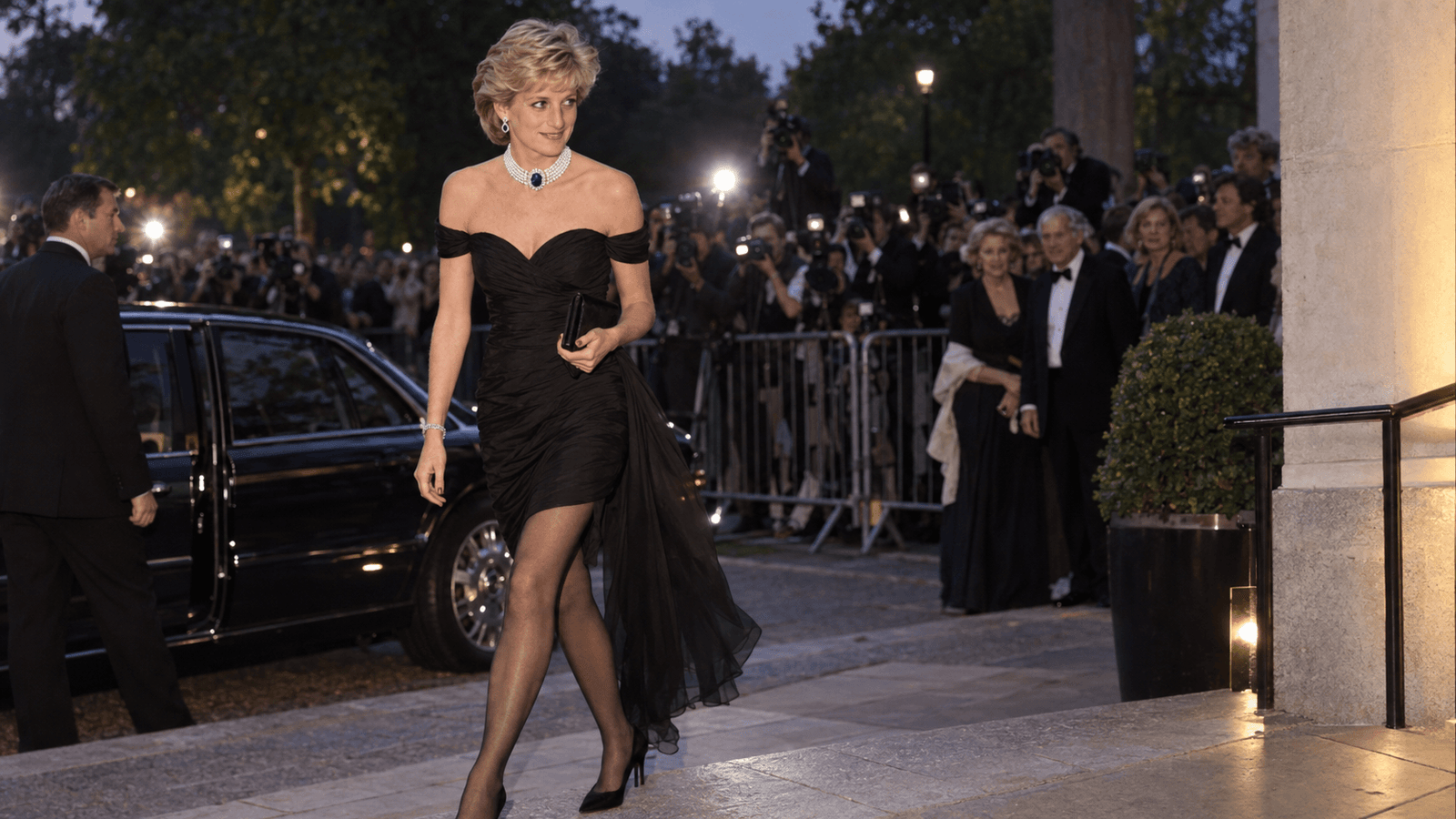
Princess Diana’s original “revenge dress,” one of the most recognizable outfits in modern royal history, is returning to auction for the first time in nearly three decades.
The black silk cocktail dress designed by Christina Stambolian will be offered by Sotheby’s in New York on December 9. The auction house has assigned it a pre-sale estimate of $150,000 to $300,000, or approximately £110,000 to £220,000.
That estimate is not a guaranteed selling price. Competitive bidding could push the final result higher—or the dress could sell below the upper projection. Recent auction results for Diana’s clothing, however, demonstrate why Sotheby’s believes a six-figure price is realistic.


This Is Diana’s Original 1994 Dress
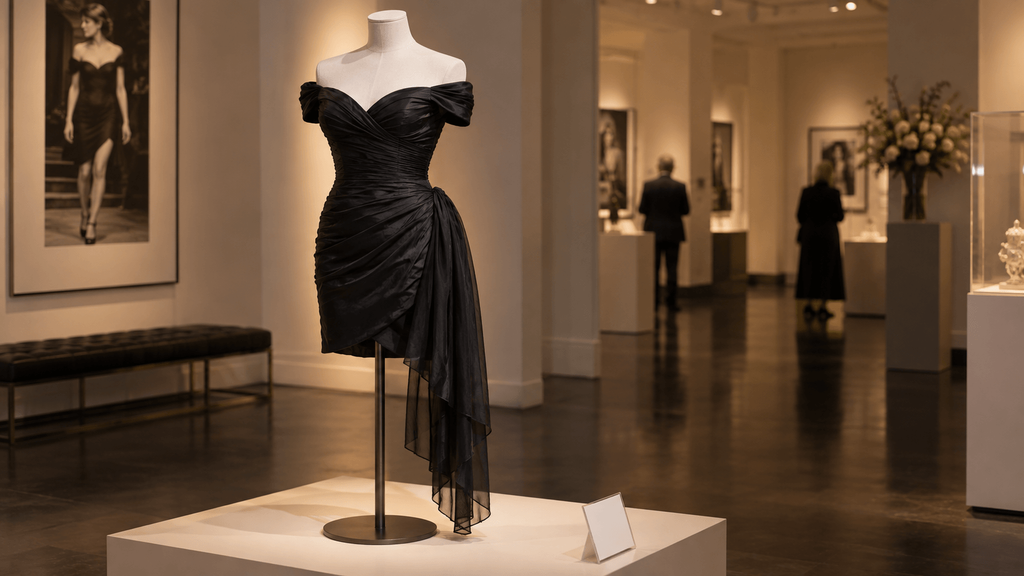
The auction lot is the original Stambolian dress Diana wore to a Vanity Fair fundraising dinner at London’s Serpentine Gallery on June 29, 1994.
Diana had separated from then-Prince Charles in 1992, but their marriage had not yet officially ended. Her appearance occurred on the same evening that a nationally televised interview with Charles aired in Britain. During the program, he acknowledged that he had been unfaithful after the marriage had “irretrievably broken down.”
The timing transformed Diana’s arrival into a global media event.
Her off-the-shoulder dress, shortened hemline and fitted silhouette represented a clear departure from conventional royal dressing. She completed the look with pearl and sapphire jewelry, black heels, a matching clutch and a vivid red manicure.
The outfit soon became known as the “revenge dress,” although Diana did not publicly give it that name or confirm that she had selected it as an act of retaliation. The label emerged from the media and fashion commentary surrounding the appearance.
Diana Had Owned the Dress for Three Years
Stambolian created the dress for Diana in 1991, approximately three years before its famous public debut.
According to an account republished from Sotheby’s, its daring design initially caused Diana to leave it unworn. She reportedly considered it too bold for a royal appearance.
Diana had apparently planned to wear a Valentino design to the Serpentine event. After details of that outfit appeared in the press, she instead selected the unworn Stambolian dress from her wardrobe.
Photographs of her arrival appeared prominently in newspapers the following morning. Rather than allowing Charles’ interview to control the visual story, Diana generated an enduring image of independence and confidence.
That cultural history—not simply the silk and construction of the garment—is the principal source of its auction value.
The Dress Was Previously Sold for About $65,000
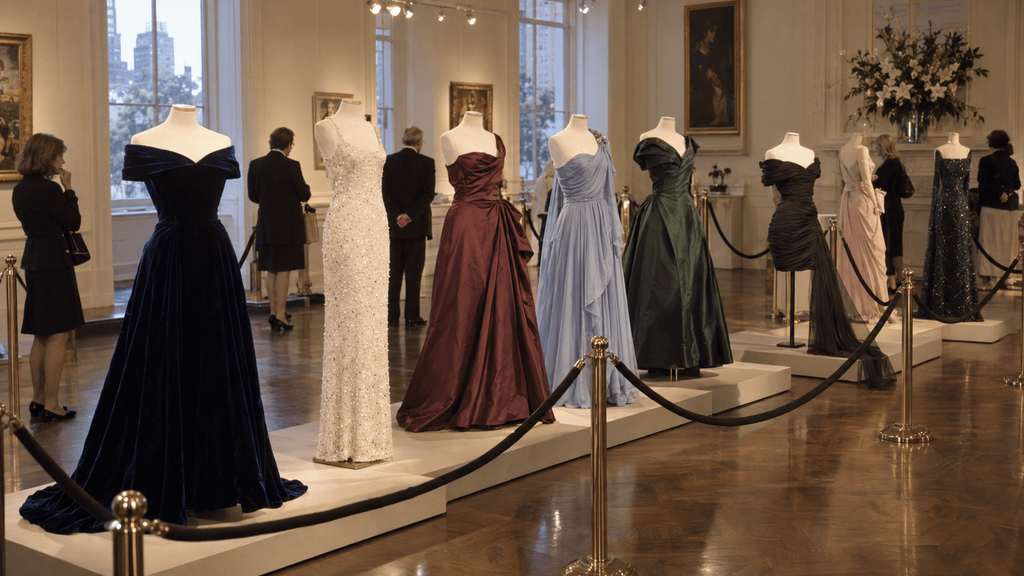
Diana placed the dress in her landmark Christie’s charity auction in New York on June 25, 1997.
The sale contained 79 gowns from her wardrobe and raised money for cancer and AIDS organizations. Scottish couple Briege and Grahame Mackenzie purchased the Stambolian dress for £39,098, approximately $65,000 at the time.
The Mackenzies intended to use the garment to support charitable fundraising. It subsequently appeared at events in Scotland and was displayed at Paisley Museum before spending much of the following three decades outside public view.
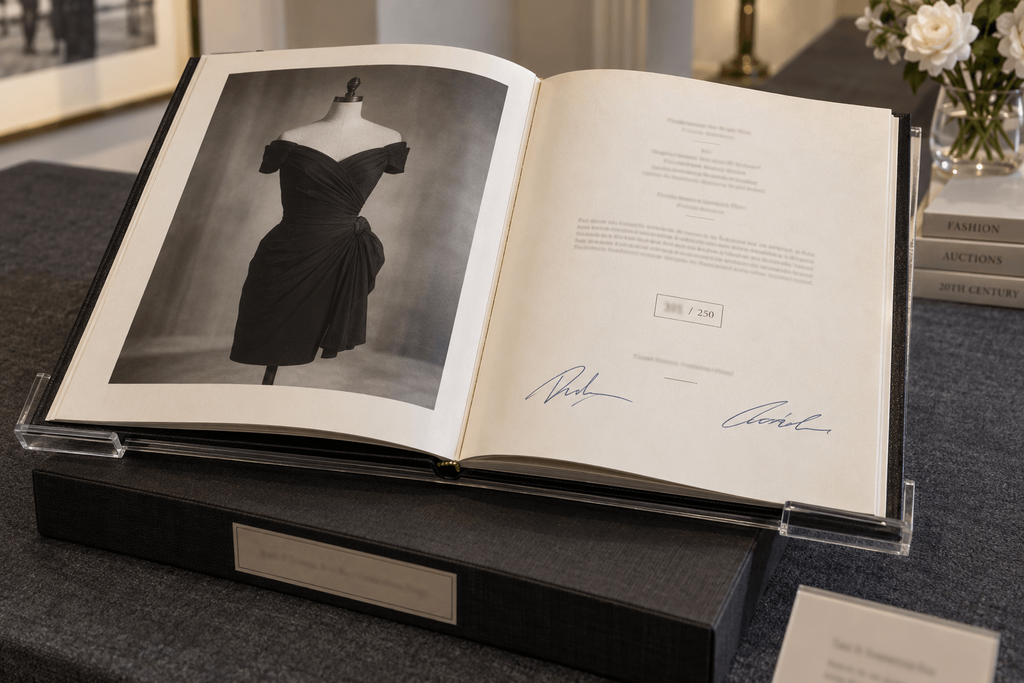
The upcoming Sotheby’s offering therefore has unusually clear provenance: it can be traced from Diana and the 1997 Christie’s auction to the original buyers. The lot also includes a copy of the 1997 sale catalog signed by both Diana and Stambolian, strengthening its documented history.
According to Sotheby’s, the current owner decided to sell the dress following her husband’s death.
Why Sotheby’s Believes It Could Reach $300,000
Three factors support the upper estimate: recognition, provenance and scarcity.
The dress is attached to a specific, extensively photographed moment rather than merely having belonged to Diana. Its history has been documented for decades, while its image has remained prominent in exhibitions, documentaries, books and dramatizations of Diana’s life.
It has also not appeared on the open market since 1997. Collectors have had almost 30 years to compete for other Diana pieces, but not for this particular garment.
Demand for her clothing has risen considerably. In December 2023, a black-and-blue Jacques Azagury evening dress worn by Diana sold for approximately $1.15 million—more than 11 times its estimate. Her famous red-and-white “black sheep” sweater achieved a similarly remarkable $1.14 million at Sotheby’s earlier that year.
A less famous Victor Edelstein dress sold for $604,800 in 2023, while Diana’s floral “caring dress” reached $520,000 in 2025.
Those results do not guarantee what the revenge dress will achieve. Condition, bidder interest, provenance and auction timing can all affect the final price. They do demonstrate that collectors have recently paid significantly more than $300,000 for Diana garments with compelling histories.
Part of the Proceeds Will Support a Hospital Charity
Sotheby’s says part of the proceeds will be donated to NHS Lothian Charity on behalf of the Royal Edinburgh Hospital.
The money will support patients, families and staff at the hospital, which provides specialist mental-health assessment and treatment in Scotland. The charitable element continues the dress’s fundraising history, which began when Diana included it in the 1997 Christie’s sale.
Before the December auction, the gown will tour Sotheby’s locations in London, Hong Kong and Geneva. It will then be displayed in New York ahead of the sale.
The London exhibition begins September 18 and runs through September 24. The New York auction is scheduled for December 9 at 10 a.m. Eastern time.
The Final Price Could Tell Its Own Story
Sotheby’s $150,000-to-$300,000 range represents an expert estimate rather than a ceiling. Auction results are determined by actual bids, and any buyer’s premium may increase the purchaser’s final bill beyond the hammer price.
What makes the dress valuable is not simply that Diana wore it. It represents a moment when she used fashion to influence how an intensely personal crisis was presented to the world.
More than 30 years later, the image remains instantly identifiable. The December auction will reveal how much collectors are prepared to pay for the garment behind it.